 Chores Wars
Gamified Chores
Gamified Chores: Why A Game Gets The Dishes Done
Kids will grind for hours to unlock a hat in a video game. Chores Wars points that same energy at the dishwasher, with streaks, loot and germ battles that only move when real chores get done and a parent signs off.
Why Game Mechanics Work For Chores
Games are good at three things chores are bad at. They show progress you can see. They pay out right away instead of "someday". And they make the next step feel small. A sticker chart tries to do the same thing, but a sticker does not level up, and nobody has ever screamed with joy at one.
Gamifying chores is not about tricking kids. The chore is still the chore. What changes is the feedback: a finished job turns into something they can see, collect and use. The dishwasher stays boring. What happens after the dishwasher does not.
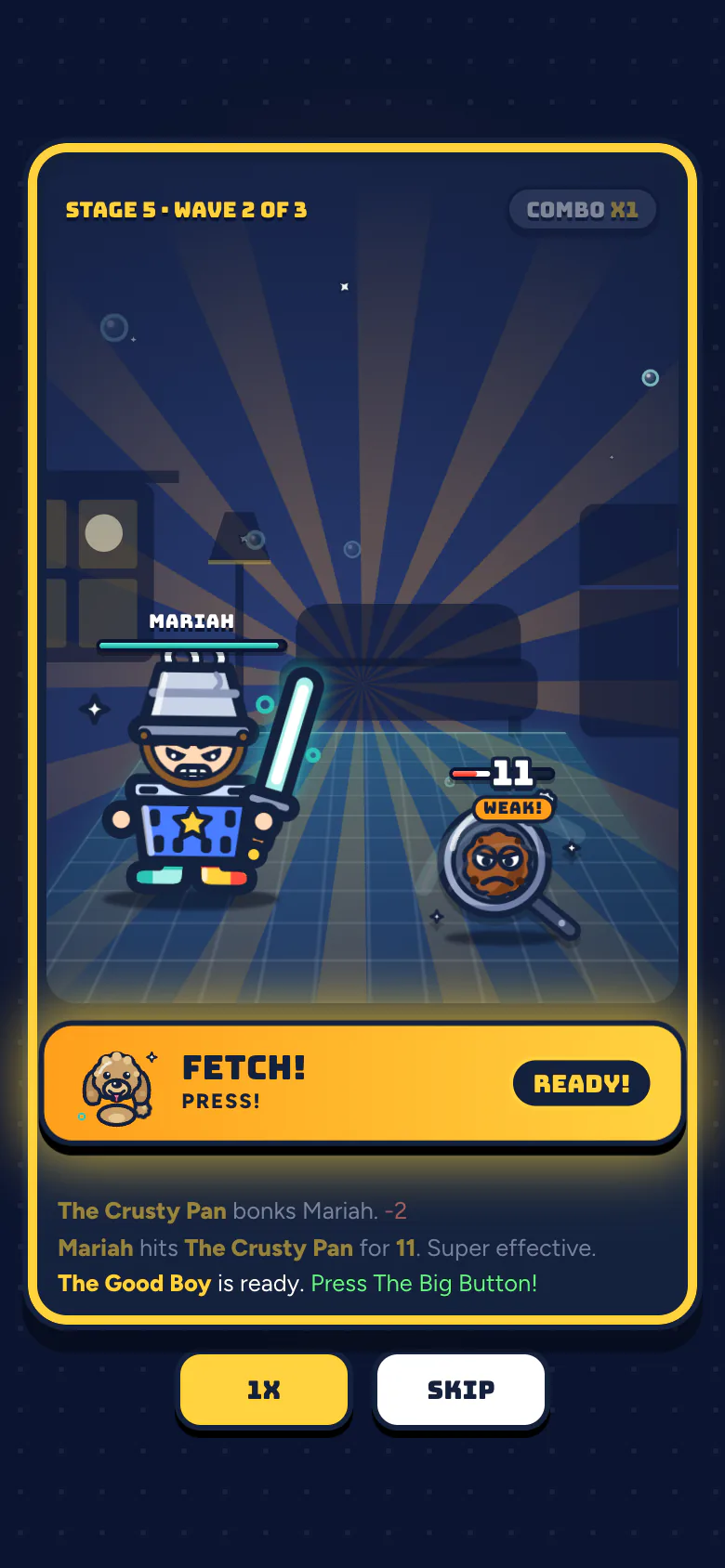
Every fight costs one Battle Energy, and energy only comes from chores. Skip the chores, lose the war.
The Mechanics, And What Each One Does
Here is what is actually inside Chores Wars, and the job each piece does for a parent.
Streaks
Every day they finish their chores, the streak grows. Trophies land at 3, 7, 14 and 30 days. Nobody wants to be the one who broke a 13-day streak over a sock.
Loot
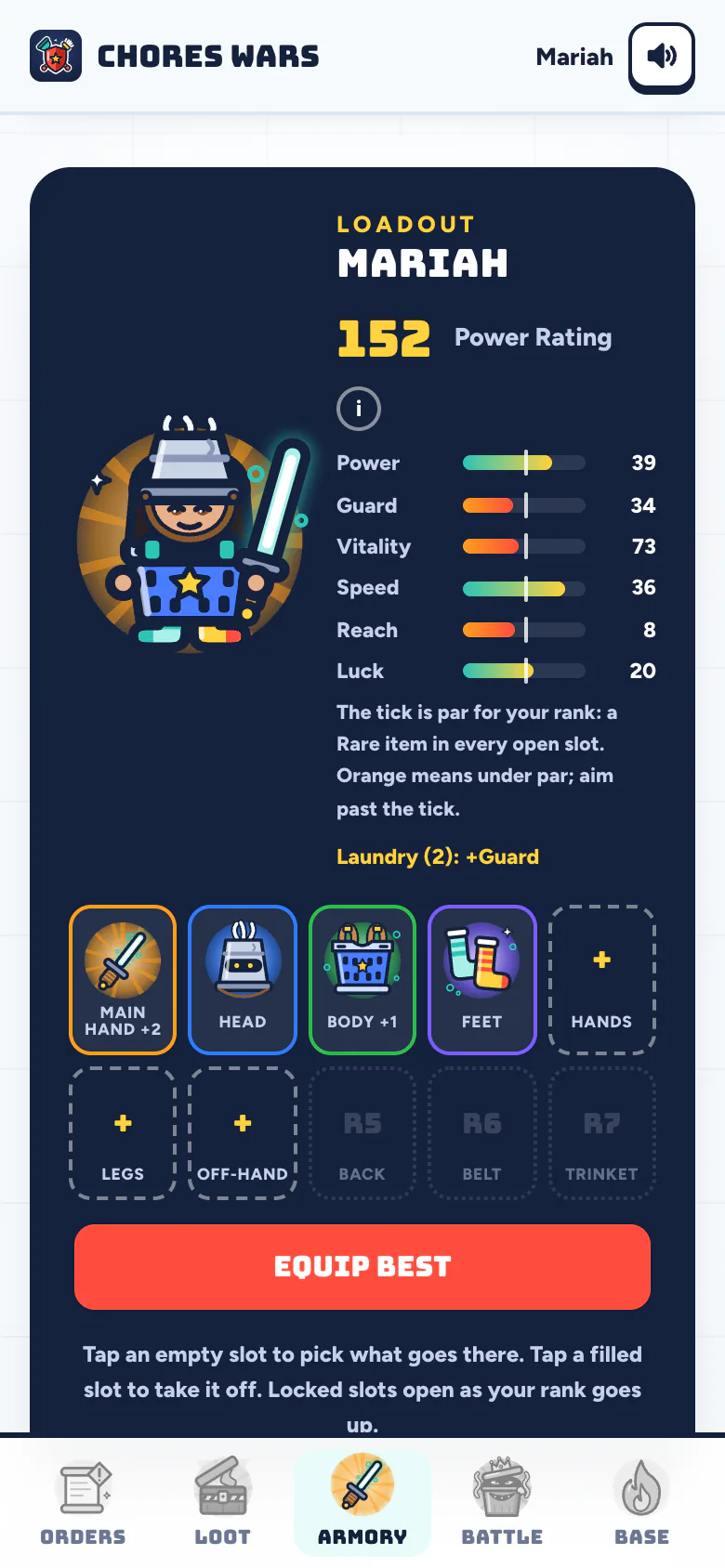
Approved chores pay coins, and 100 coins open a crate. Every crate is a full reveal, Common to Mythic, with gear that has real stats.
A Goal Worth Chasing
Gear goes on their hero in the Armory, and the hero fights waves of household germs, room by room, with a boss every fifth stage.
Sign-Off
The secret ingredient. Nothing pays until a parent approves, so the game rewards the chore, not the tap.
Why Sign-Off Is The Whole Game
Plenty of chore apps are a checklist with confetti. The problem: if the reward comes from tapping, kids learn to tap. "I did it" and "I did it" are not the same sentence.
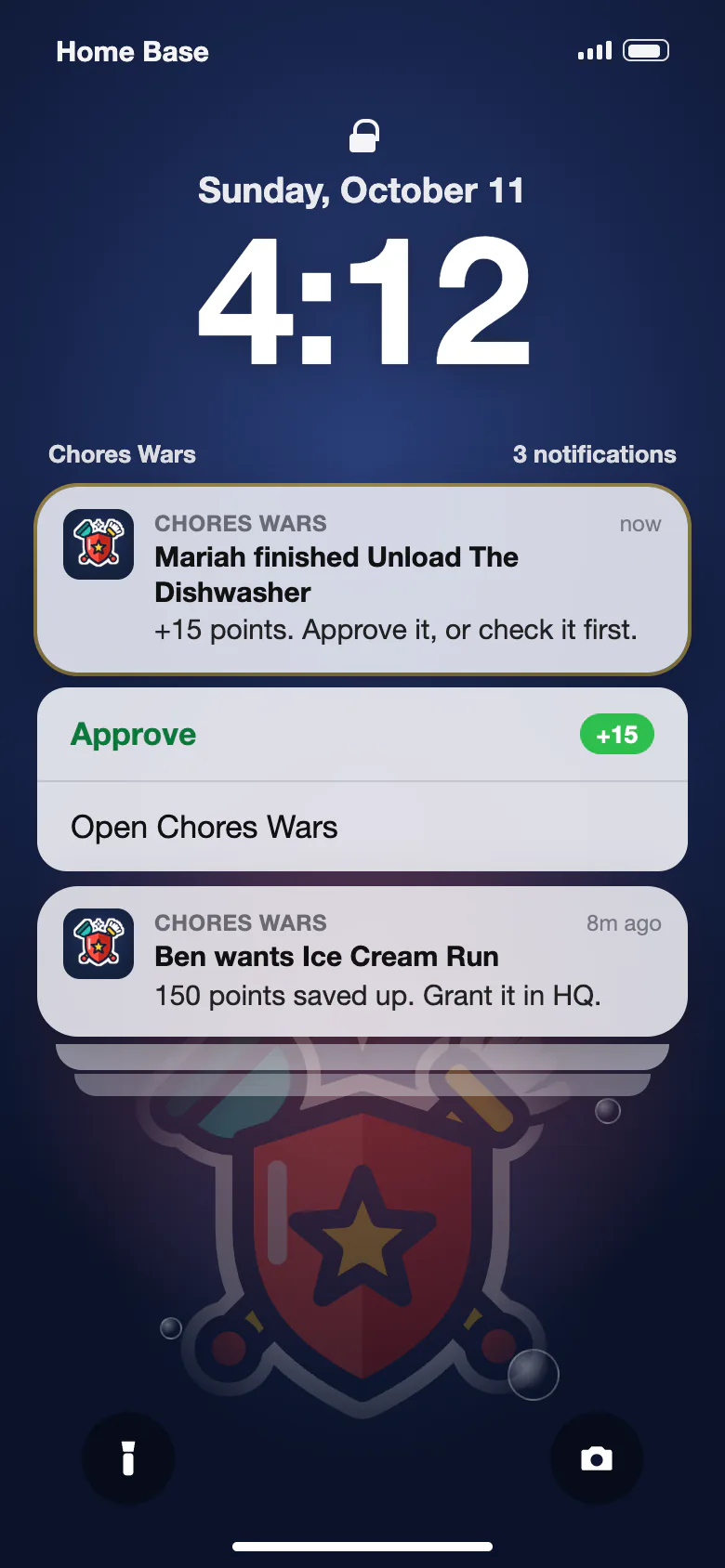
In Chores Wars, a finished chore waits for a parent. It lands on your lock screen with an Approve button. Approve it and the points, coins and Battle Energy pay out. Not quite done? Send it back. Because the game only moves on approved chores, the fastest way to win is to do the chore properly the first time. That is the lesson, delivered by a germ.
Loot, Done Responsibly
Crates are fun because of the reveal. They are also the part of game design that deserves the most care around kids. So here is exactly how ours work: a standard crate shows its odds before it opens, from Common at 50% down to Mythic at 0.2%. Special Quest crates have better odds. A pity counter guarantees an Epic or better within 10 crates and a Legendary or better within 40, and kids can see it.
Unwanted gear is never wasted: kids salvage it into Dust, upgrade the gear they love, or craft the exact item they want. Chance is never the only way to get something.
What We Do Not Do
A game for kids should be judged as much by what it leaves out. These are the lines Chores Wars does not cross.
- Never
No Ads
Not to kids, not to parents. The household pays $5 a month and that is the whole business.
- Never
No Selling To Kids
Kids cannot buy anything. There is no store, no premium currency and no "just one more" button.
- Never
No Loot Boxes For Money
Coins come only from approved chores. Nobody can buy coins, crates or gear, ever. That is a hard rule, not a setting.
- Never
No Hidden Odds
The odds are on the crate, and the pity counter is on screen: an Epic or better within 10 crates, a Legendary or better within 40.
- Never
No Pressure Tricks
No countdown timers on crates, no fake near misses in the reveal, and no notifications to kids after 9 PM.
- Never
No Cash Value
Gear, coins and crates cannot be sold, traded or cashed out. They are for bragging rights and germ fights.
And on privacy: a kid in Chores Wars is a first name and a PIN a parent sets. No email, no photo, no birthday, no chat, no strangers.
Ready to try it on your own house? Start with a fair list from chores for kids by age, see how the chore chart app works day to day, or set your rate in the allowance guide.
Now Recruiting
Enlist Your Family
7 days free, then $5 a month for the whole household: every parent, every kid, every germ. Cancel any time.
Report For DutyTwo minutes to set up. Kids sign in with a PIN, no email.